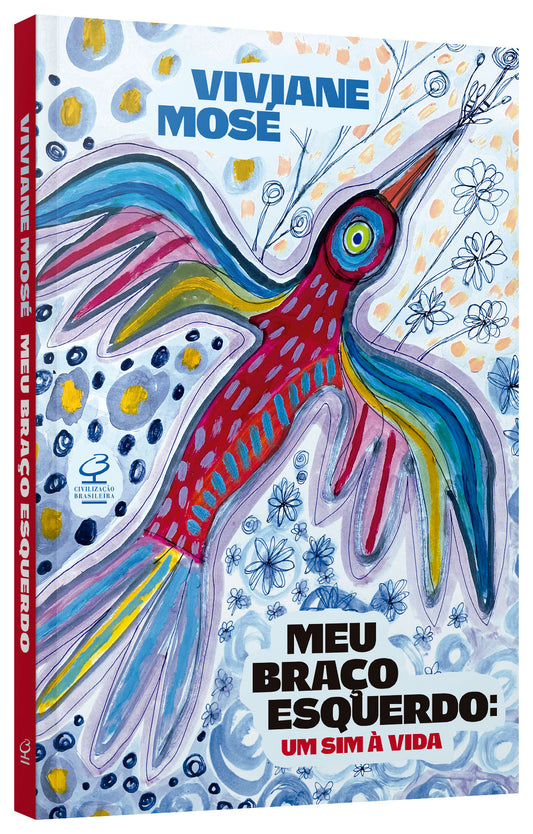
The species that knows , a bestseller by poet and philosopher Viviane Mosé, returns to Civilização Brasileira in a new edition with an unpublished text by the author who thinks about philosophy in an accessible and poetic way.
By betting on the autonomy of reason, science, and technology, the modern individual believed he could build a better world than the one offered by nature. Correcting nature, however, ultimately meant attempting to correct his own existence, for there is no way to separate ourselves from nature, of which we are a part and which constitutes us. In this attempt, human beings ended up provoking an even greater dissociation between soul and body. Consequently, adverse reactions and side effects of reason were evident in their own bodies and in the body of nature throughout the 20th century: in nature, ecological catastrophes; between countries, wars; in social relations, bestiality; for the human body, instead of more joy and potency, more depression and the boom observed in the psychotropic industry.
In this beautiful essay, Viviane Mosé shows us that the world has not ended; only a certain ideal of the world has. Faced with the pretensions that have crumbled beneath our feet, she asks: what values do we want to foster or reject? Remaking a world may be impossible for the traditional and nihilistic culture that has so invested in this modernity now in crisis. Unsuspectingly, Mosé provokes us, perhaps an affirmative and creative culture like Brazil's is best equipped to rise to this task of reinventing the world. By reinvention, we mean the reinterpretation of values and the recognition of reality. With philosophy and poetry, the author proposes a new rationality, not exclusive but multiple, that helps us no longer desire to eliminate all pain, but rather to overcome suffering through the affirmation of the totality of life. With Nietzsche as our guide and bringing with her other great names in the history of philosophy, in *The Species That Knows* the author lays the foundations for a new education that entails the apprehension, appreciation, and aesthetic enjoyment of life.
André Martins, associate professor
of the Graduate Program in Philosophy at UFRJ