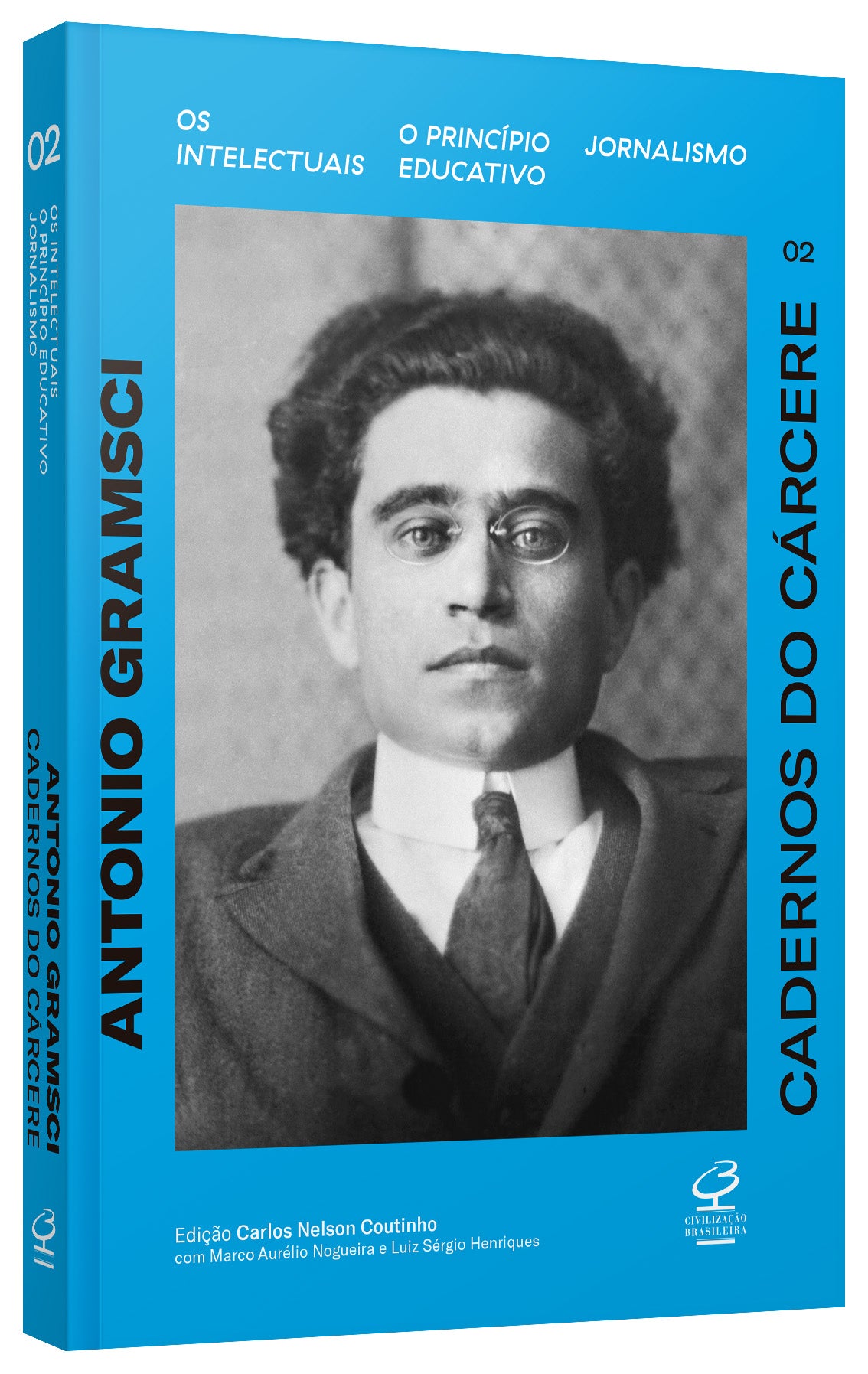
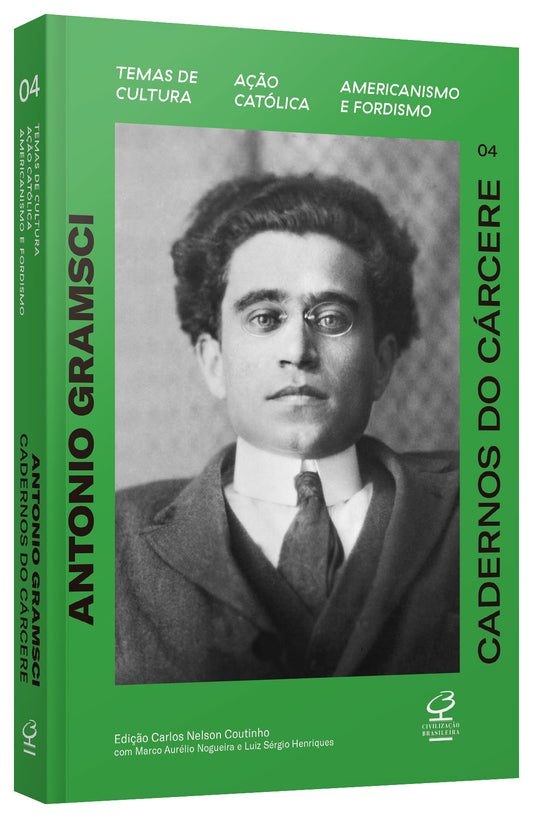
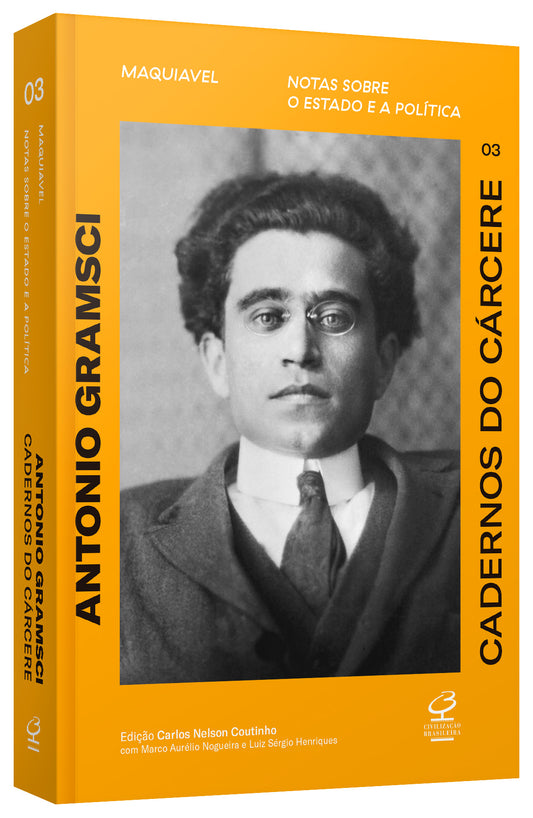
This volume constitutes a self-critique: Gramsci questions what role intellectuals should play in a scenario of heated political struggle. To organize his analysis, Gramsci investigates education as a process of action and an instrument of struggle, as well as the role of journalists in reporting on events.
This Brazilian edition of the Prison Notebooks was organized by Carlos Nelson Coutinho, internationally recognized as one of the greatest experts on Gramsci's thought, with the collaboration of Luiz Sérgio Henriques, editor of the online magazine Gramsci e o Brasil, and Marco Aurélio Nogueira, professor at the Universidade Estadual Paulista.
“A new generation of scholars now has direct access to the original texts in which Gramsci sets out his conceptions of the State and civil society, as well as of good sense and common sense, of hegemony and coercion, of passive revolution and cosmopolitan democracy, of war of position and war of movement, of conformism and the national-popular, or of intellectuals and the organization of culture.” - Leandro Konder
When the Prison Notebooks began to be published in Italy in 1948, we learned that, during fascism, theoretical Marxism was not dead. The most original interpreter of Marx, after Labriola, had written his major works—'für ewig ,' as they called them—precisely during the years of triumphant fascism. Gramsci's Marxism was not the Marxism of professors. Gramsci had exchanged university studies for political struggle and was one of the founders of the Italian Communist Party. It was a Marxism that did not simply test itself against traditional philosophical problems, but that confronted the real problems of our time: Gramsci was a Marxist in the sense that he extended, in the direction of the critique of politics, the work that Marx had developed with particular reference to the critique of political economy. -Norberto Bobbio