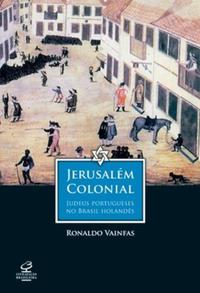
Ronaldo Vainfas's "Colonial Jerusalem" presents a detailed study of the history of Portuguese Jews in Brazil. The renowned historian drew on little-known sources and previously studied documents to chronicle the formation of this community in the colonial northeast under Dutch rule, and went further by showcasing the identity transformations of this people who lived in the diaspora within the diaspora. Along with this new title, Civilização Brasileira is also releasing "Trópico dos pecados" (Tropic of Sins). Vainfas's acclaimed work, sold out in bookstores for years, has been reissued, rekindling the discussion on morality, sexuality, and the Inquisition in colonial Brazil. Vainfas's general and anthropological perspective reveals the dynamics of Sephardic trade networks within 17th-century commercial capitalism and the successes and failures of these New Christians who reconverted to Judaism. Colonial Jerusalem innovates by showing how this change had to adapt to the nuances of the tropical climate and the unusual religious environment created by the coexistence of Protestants and Catholics. The religious tolerance encouraged by Maurice of Nassau led to the formation of the first synagogue in the Americas, a space of dispute and tension in Pernambuco. The first waves of immigrants arrived between 1635 and 1637. A few years later, the Inquisition began to act, and thus began the insurrection, which culminated in the expulsion of the Dutch in 1654. In this short period of time, the Jews who settled in Brazil encountered resistance from the Calvinists and the ambiguous complacency of the Catholics. The economic prosperity encouraged by the Dutch ruler allowed the group to fully exercise their special competence in trade and reestablish the foundations of the renegade religion in the Iberian world.