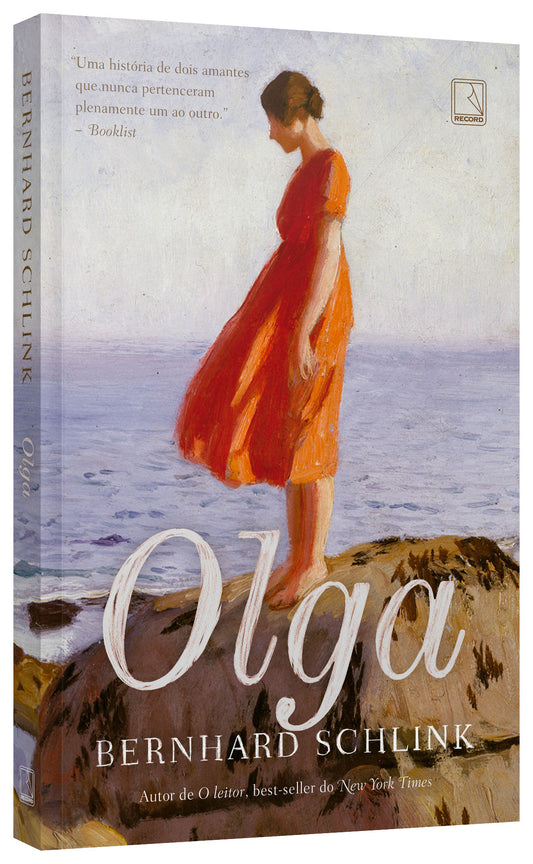
One of the most acclaimed German-language books of recent times, The Reader , has been reissued with a new cover. In this award-winning novel, Bernhard Schlink pits two generations, pre-war and post-war, against each other through the intimate relationship between a man and a woman.
Michael Berg is a teenager when he meets the enigmatic Hanna, a woman twenty years his senior. The two then indulge in an obsessive love affair, and their encounters follow a ritual: first they bathe, then he reads fragments of books to her, and only then do they make love. Michael never learns much about his lover. So, when she suddenly disappears, bringing an abrupt end to that period of happiness, he becomes convinced he will never see her again.
Years later, however, he meets her again at a trial. Hanna is accused of several war crimes and held responsible for countless deaths in a Nazi concentration camp. Michael, then a law student, follows the case in disbelief, lost between memories of his former lover and his indignation at the recent discovery. In his attempt to uncover the true identity of the woman he loved, Michael gradually realizes that Hanna may be hiding a secret he considers more shameful than murder.
The novel's pages pose the agonizing question: how can one love someone responsible for one of the greatest atrocities the world has ever seen? Bernhard Schlink presents a beautiful and austere narrative about the struggle to bridge the gap between pre- and post-war generations in Germany, between the guilty and the innocent, between words and silence.
A fascinating novel about love, shame, and pity; about the open wounds of history; about a generation of Germans haunted by a past they never witnessed, but in whose shadow they are forced to live.
Since Perfume , The Reader has been the most acclaimed German novel in its country of origin and worldwide. Translated into several languages, the work was adapted into a film starring Kate Winslet and Ralph Fiennes.
“Moving, evocative, and hopeful...it speaks directly to the heart.” — The New York Times Book Review