"
We live in the midst of a global escalation of destruction and war. How can we understand this moment?
"On Violence" is one of the most important titles in the vast work of German thinker of Jewish origin Hannah Arendt. Written between 1968 and 1969, when the author was already exiled in the United States, this essay reflects a desire to understand an extreme political moment. The West, especially Europe, was seeking to recover from the recently concluded Second World War, but the global tone was still one of conflict, with wars for independence in African countries, the emergence of dictatorships in South America, the Vietnam War, and the atomic threat. The student movement had staged protests in Paris in May 1968 that shaped the sentiments of a generation. The cry of "nonviolence" was losing ground in the debate over the role of violent means of resistance to oppression.
The political and philosophical context was complex, replete with characters, desires, and proposed actions. Manichaean analyses were no longer sufficient, and it was precisely from concrete problems that Arendt proposed to evaluate the issue of violence. If tradition could no longer explain the facts, these events began to be approached from their immediate perspective on human history. The ruptures of the 20th century are, therefore, recurring themes for the thinker. There, the future reflects a violent past that found a way to politically realize itself in the technological revolution (remember the atomic bomb).
Knowledge and understanding can be paths to de-glorifying violence. To understand this phenomenon, it is necessary to address the creation and maintenance of violence—and therein lies the originality of her approach. Contrary to traditional thought, Arendt differentiates between power and violence, arguing that the former—being inherent to any political group—is a communal faculty, exercised collectively. Thus, the latter can only be seen as an opposing force and contrary to this vigor—violence destroys power, not creates it.
The rise of brutal and destructive behavior in the 20th century is precisely commented upon. Based on the modernization of industry, the massification of desires, the bureaucratization of life, and the disintegration of the sense of community, Arendt constructs a complex political and social puzzle—an analysis still relevant for understanding current political and social phenomena.
On Violence is a magnificent book by Hannah Arendt that addresses major issues of human existence: coexistence, power, brutality, fear, and vitality.
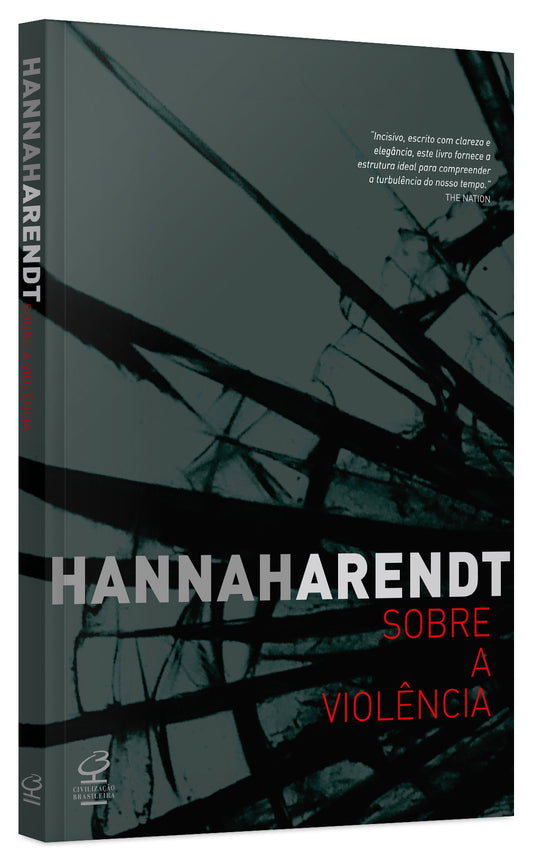
“Incisive, clearly and elegantly written, this book provides the ideal framework for understanding the turbulence of our time.” — The Nation
"