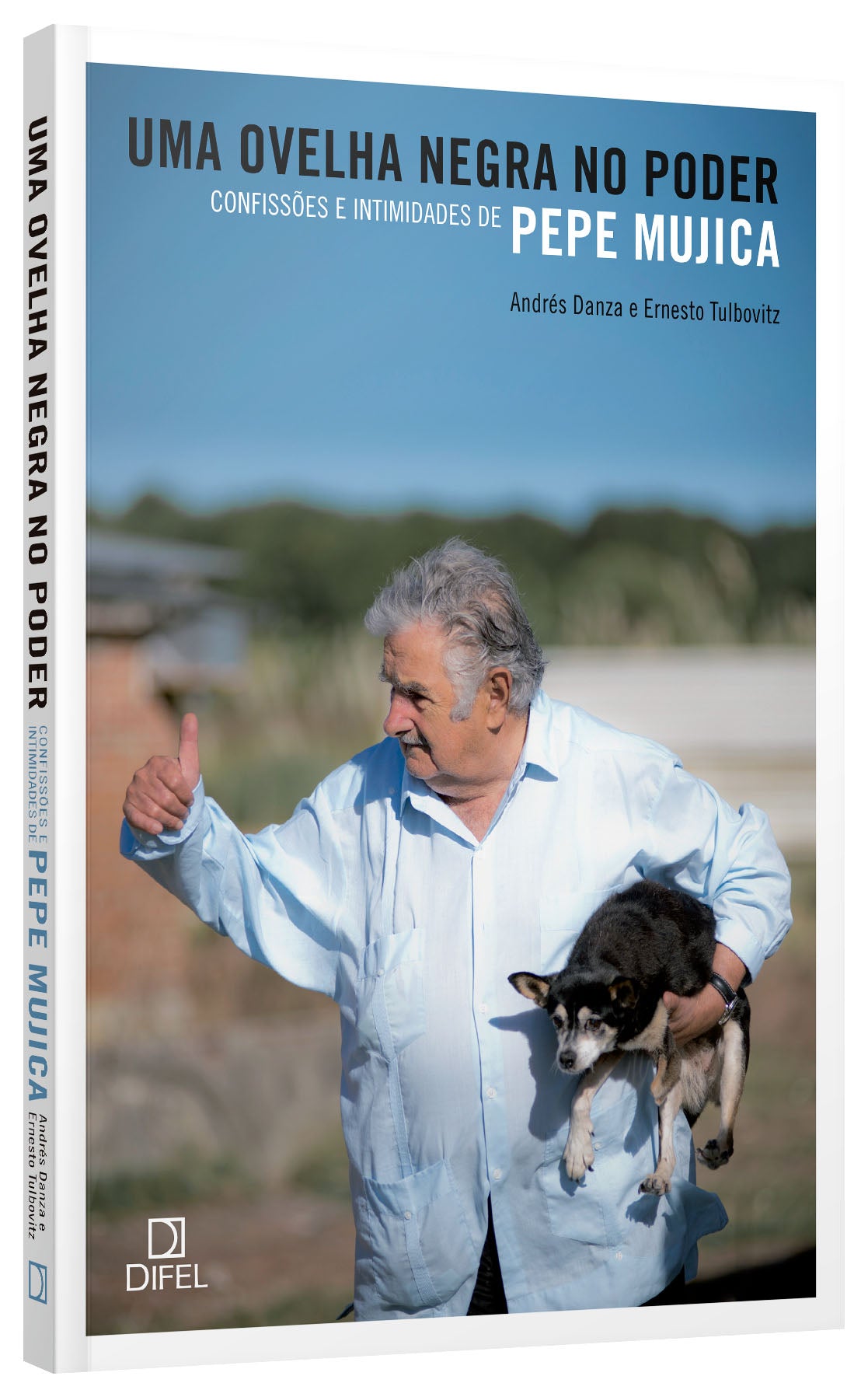
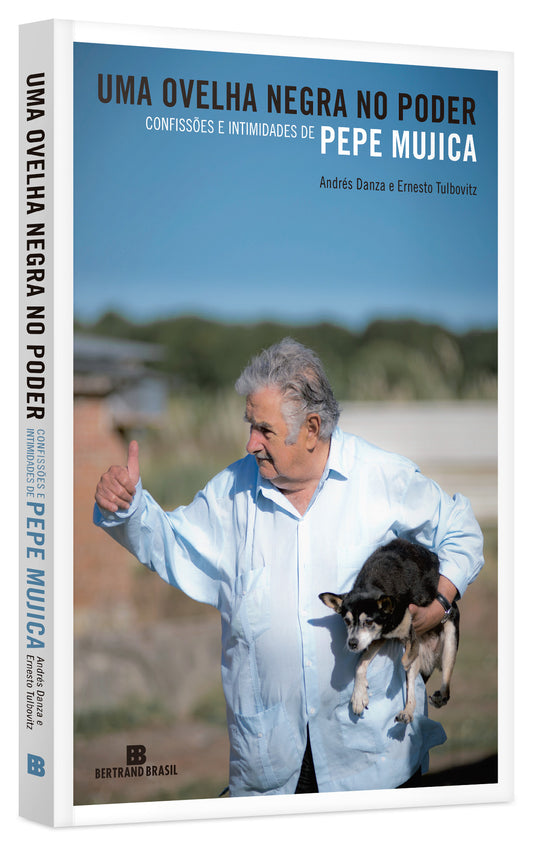
A black sheep in power

A black sheep in power

Confessions and intimacies of Pepe Mujica
Conteúdo do livro
CÓDIGO DA OBRA9788574321653
Sinopse

In a story built over twenty years of interviews, Andrés Danza and Ernesto Tulbovitz reveal what former Uruguayan president Pepe Mujica thinks about his path to and rise to power, his way of living and exercising it, and the loneliness of feeling like a black sheep in a world alien to him.

Pepe Mujica is undoubtedly one of the most interesting figures in contemporary history. He was a member of the National Liberation Movement—which, in the 1960s, robbed banks to distribute money to the poor—and fought against the military dictatorship in Uruguay between 1973 and 1985. As a result, he was imprisoned for nearly fifteen years, seven of which he spent in solitary confinement.

With the return to democracy, he entered party politics. He served as a congressman, minister of Livestock, Agriculture, and Fisheries, senator, and finally president of the Republic, elected by a coalition of left-wing parties. The legalization of same-sex marriage, the decriminalization of abortion, and the regulation of marijuana production and sale by the state placed Mujica and Uruguay in the spotlight as a progressive vanguard in South America.

In his youth, as a member of the National Party, he visited the Soviet Union and became disillusioned with communism when he saw that the Communist Party's top brass lived in conditions unattainable for the majority of the population.

Mujica defines himself as an anarchist and says that anarchism and liberalism are first cousins. While he was president, he moved easily among world leaders such as Barack Obama and Vladimir Putin. He had good relations with the Castro brothers and supported the government of Evo Morales. He considers himself a friend of Lula and spent time with Hugo Chávez, although they had some disagreements. He held no resentment toward the military. He is an atheist, but believes the Catholic Church is one of the most respectable institutions in the world.

He never stopped studying. Even when he was president, he never stopped visiting his favorite places, driving his Volkswagen Beetle, and living on his modest farm near Montevideo. He despised the ostentation of power, palaces, and luxury cars, and always refused to wear a tie. He donated about 70% of his earnings to affordable housing programs.

This book, the result of a report constructed over decades, establishes Pepe Mujica as an international phenomenon and Latin American icon.

ISBN978-857-432-165-3
Tradutor
Altura225 mm
Largura155 mm
Profundidade11 mm
Lançamento05/08/2024
Páginas224
View full details
Conteúdo do livro
CÓDIGO DA OBRA9788574321653
Sobre o autor

Andrés Danza

Andrés Danza é bacharel em Comunicação Social pela Universidade Católica do Uruguai e jornalista desde os 19 anos. Começou como cronista em revistas literárias, foi colaborador do El Observador e trabalha, desde 1996, na revista semanal Búsqueda, onde atualmente é editor-geral. Acompanhou vários presidentes em viagens internacionais e fez cursos de jornalismo na Alemanha, na Bélgica e no Japão.

Ernesto Tulbovitz estudou História no Instituto de Profesores Artigas (IPA) e é jornalista desde os 23 anos. Trabalhou nas rádios Centenario e Panamericana, no diário Últimas Noticias e na revista Tres, assim como em outros meios de comunicação da Espanha, de El Salvador e da Argentina. Acompanhou o presidente Mujica em suas viagens a mais de uma dúzia de países.

Ver mais sobre o autor
Sobre o autor

Ernesto Tulbovitz

Andrés Danza é bacharel em Comunicação Social pela Universidade Católica do Uruguai e jornalista desde os 19 anos. Começou como cronista em revistas literárias, foi colaborador do El Observador e trabalha, desde 1996, na revista semanal Búsqueda, onde atualmente é editor-geral. Acompanhou vários presidentes em viagens internacionais e fez cursos de jornalismo na Alemanha, na Bélgica e no Japão.

Ernesto Tulbovitz estudou História no Instituto de Profesores Artigas (IPA) e é jornalista desde os 23 anos. Trabalhou nas rádios Centenario e Panamericana, no diário Últimas Noticias e na revista Tres, assim como em outros meios de comunicação da Espanha, de El Salvador e da Argentina. Acompanhou o presidente Mujica em suas viagens a mais de uma dúzia de países.

Ver mais sobre o autor