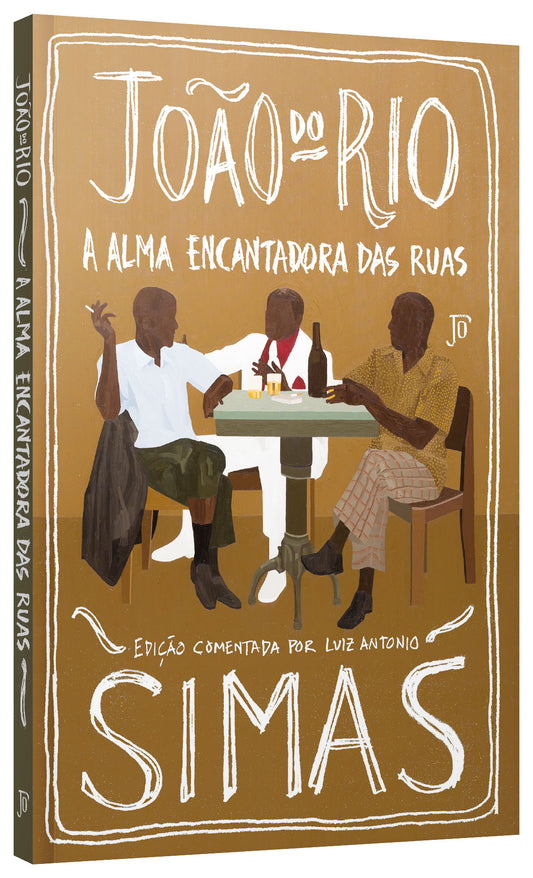
João do Rio's classic gets its first annotated edition, historically and culturally contextualizing Rio de Janeiro portrayed through the eyes of one of Brazil's greatest chroniclers.
"Vida Vertiginosa" is one of the greatest works on the Carioca Belle Époque . In it, João do Rio takes an investigative look at Rio de Janeiro, then the capital of a Brazil undergoing a rapid modernization process. In 1903, Mayor Pereira Passos initiated a series of hygiene, urban planning, and customs reforms, primarily aimed at adapting the city to European development standards. João do Rio's pioneering chronicle is the result of his wanderings, his flânerie , through a bustling city undergoing complete transformation.
Originally published in 1911, Vida vertiginosa is the creative testimony of a man who recorded and conceived of a new world that was only just beginning to appear. A world that, with its characteristically profound speed, has never stopped multiplying and accelerating at breakneck speed. The book's timeliness speaks for itself: guided by one of the greatest Brazilian chroniclers of all time, its readers are one step closer to discovering themselves as characters.
The 25 chronicles gathered in Vida vertiginosa address themes such as competitiveness in the professional environment, the parallel reality experienced in the favelas, the inferiority complex as a legacy of the colonial past, the decline of the educational system, the privacy crisis, nascent feminism and the importance given to appearances, aspects already present in society at the time.
This is the first annotated edition of this classic, created to provide contemporary readers with an understanding of the historical and cultural context of Rio de Janeiro during the Belle Époque . The edition also includes an introduction, chronology, and bibliography by the author. All supporting material is written by Giovanna Dealtry, researcher and professor of Brazilian literature at the Institute of Letters of the State University of Rio de Janeiro (UERJ).