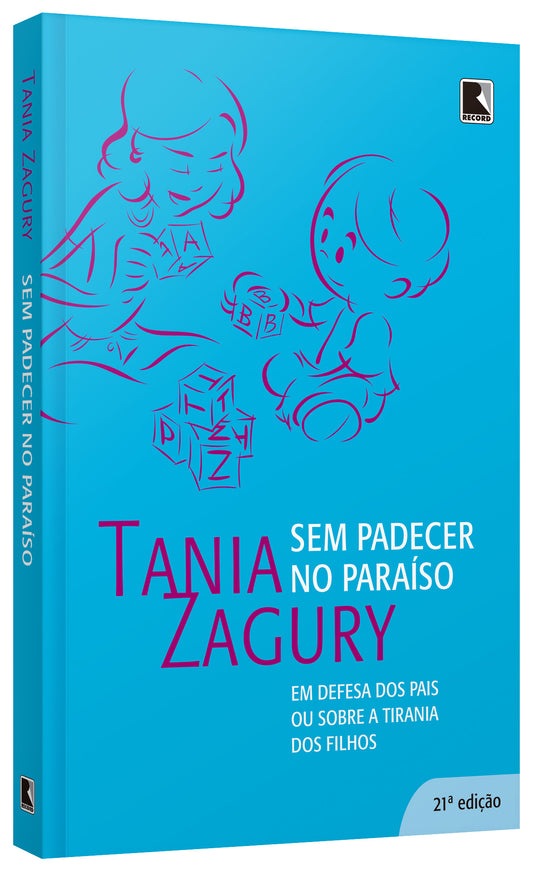
In her travels around the country, researcher and philosopher Tania Zagury, a master's degree holder in education, has maintained a frank and open dialogue with both parents who seek her out with questions about their role with their children and with the young people themselves. The depth of her research and studies, largely recorded in books that have become references, such as *The Adolescent for Himself* and *Without Suffering in Paradise*—she is frequently sought out by the press to share her opinions on the subject—point to a paradox: many parents today face the challenge of raising a pre-adolescent who begins demanding freedom very early on, or a young adult who, constrained by the professional competition of the globalized world, finds himself forced to postpone his or her emancipation. To answer the questions frequently asked of her in lectures and meetings, Tania Zagury has compiled and summarized them in *SHORTENING ADOLESCENCE*, which Record is now offering in bookstores. In objective, non-academic language, the author points the way and proposes reflections on the education of adolescents. How can we address the length of adolescence for children who, at age 11, begin to demand their rights or, at age 20, are often still completely dependent on the family structure? This new adolescent, matured prematurely and inconsistently by the media and imprisoned by the demands of the new job market, has become a challenge for parents and educators: it is necessary to understand them better and prepare them for society. Adolescence is becoming increasingly longer. The World Health Organization considers adolescents to be young people between 10 and 20 years old; not long ago, it was the period between 13 and 18. It seems that a large portion of young people insist on not growing up, on not taking on the tasks and responsibilities that characterize adulthood. At the same time, there is a growing marginalization of young people from the middle and upper classes, an increase in drug use, violence, and consumerism, and the establishment of a culture of pleasure and leisure, which neglects all forms of responsibility. In "SHORTENING ADOLESCENCE," Tania Zagury shows that, above all, safe and firm parental action is the most effective way to guide their children toward a productive, healthy, and happy future. Emphasizing the importance of social aspects of education before psychological ones, she advocates shortening the adolescence period as a way to encourage young people to responsibly take control of their own destiny and future. The author shows that this approach also strengthens parents' self-esteem, helps them overcome their fear of making mistakes, and eliminates overprotective behavior—factors that, among other things, lead to a prolonged adolescence for their children.
Nascida no Rio de Janeiro, carioca de coração, pesquisadora, escritora, mestre em Educação e Professora adjunta da UFRJ e da Unirio, Tania Zagury vem mantendo em todos os seus livros uma linha de trabalho que se caracteriza pela pesquisa científica fundamentada no estudo de fatos colhidos na realidade social. A autora utiliza linguagem clara e objetiva, propiciando uma tal aproximação de seu leitor, que não só faz com que sua obra atinja pessoas de todos os níveis culturais, como também justifica a grande vendagem de seus livros. A produção literária de Tania Zagury é extensa, totaliza hoje 36 livros, muitos dos quais traduzidos para o exterior (Itália, França, Espanha, Argentina, Canadá, México, República Dominicana e Cuba). Alguns de seus grandes sucessos: Sem padecer no paraíso, Educar sem culpa, Filhos: manual de instruções, O adolescente por ele mesmo, Encurtando a adolescência, Limites sem trauma, Escola sem conflito e O professor refém, entre outros.