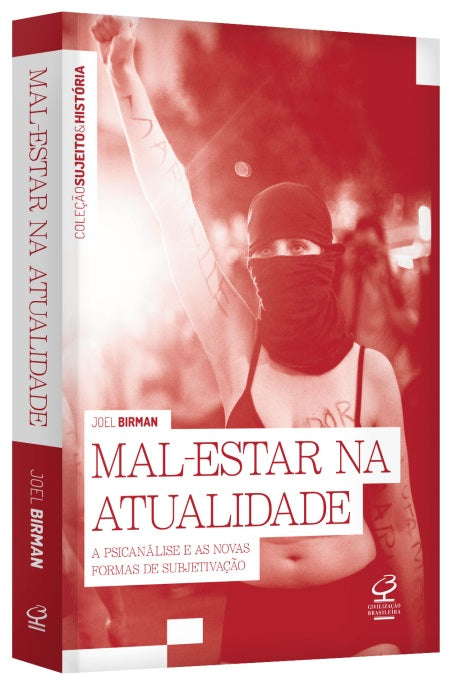
War and politics in psychoanalysis

War and politics in psychoanalysis

Autor: Joel Birman
Conteúdo do livro
CÓDIGO DA OBRA9786558021230
Sinopse

In War and Politics in Psychoanalysis, award-winning psychoanalyst Joel Birman retraces Freud's approach to the concept of war and its relationship with politics and the foundation of psychoanalysis.

After the end of the Cold War, with the victory of liberal democracy and the free-market capitalist economy, according to Francis Fukuyama's proposition of the end of history , it was believed that humanity would achieve equilibrium. However, in the years following the fall of the Berlin Wall, with the outbreak of war between the United States and Iraq, the world witnessed intense bloodshed promoted by the greatest power in the Americas in its attempt to colonize the East.

At a new threshold of historicity, cultural and religious identities became the primary source of conflict worldwide, confirming Samuel P. Huntington's thesis of the clash of civilizations . In this sense, the sovereignty of countries began to be jeopardized by the argument of security against terrorism, which, with the complicity of the media, justified the incessant increase in control over citizens and the invasion of historically constituted states. A state of exception began to prevail across the globe, and aberrations such as Guantánamo Bay became monuments to this horror.

In War and Politics in Psychoanalysis , award-winning psychoanalyst Joel Birman retraces Freud's theoretical path, which attempted to understand the social and political structures that would explain why, after one hundred years of peace in Europe – between the Napoleonic Wars and the First World War –, the most evolved societies would promote a new bloodbath and why the masses so easily accepted placing their lives at the service of the elites.

Contrary to those who consider the political and social body of Sigmund Freud's work to be ancillary, in this accessible and concise work, award-winning psychoanalyst Joel Birman shows why this production is an inextricable part of Freudian discourse.

ISBN978-655-802-123-0
Tradutor
Altura205 mm
Largura135 mm
Profundidade8 mm
Lançamento12/02/2024
Páginas160
View full details
Conteúdo do livro
CÓDIGO DA OBRA9786558021230
Sobre o autor

Joel Birman

Joel Birman é professor titular e professor aposentado no Instituto de Medicina Social da Uerj. Doutor em Filosofia pela Universidade de São Paulo, pós-doutor pela Université Paris VII, é membro de honra do Espace Analytique. Foi premiado três vezes com o Jabuti, categoria Psicanálise e Psicologia, e recebeu o Prêmio Sérgio Buarque de Holanda, categoria Ensaio Social, da Biblioteca Nacional. Pela Civilização Brasileira, publicou O trauma na pandemia do Coronavírus, Cartografias do avesso, Cadernos sobre o mal, Mal-estar na atualidade, Gramáticas do erotismo, Arquivos do mal-estar e da resistência, O sujeito na contemporaneidade e As pulsões e seus destinos.


Claudine Haroche é doutora em Sociologia pela Universidade de Paris VII. Diretora de Pesquisas no Centre National de Recherche Scientifique e membro do Centro Edgar Morin na École d’Hautes Études em Sciences Sociales. Publicou diversos livros, entre os quais Da palavra ao gesto (Papirus, 1998), La Face obscure des démocraties modernes com Eugène Enriquez (Érès, 2002), e Histoire du visage: exprimer et taire ses émotions du XVIe au début du XIXe siècle, com Jean-Jacques Courtine (Petite Bibliothèque Payot, 2007).


Georges Balandier foi etnólogo, antropólogo e sociólogo francês. Professor emérito da Universidade de Sobornne, diretor de estudos da École d'Hautes Études en Sciences Sociales, escreveu importantes livros sobre a globalização nos ditos países em desenvolvimento. Seu estudos focaram em especial nos países africanos e foi responsável pela criação da cadeira de sociologia africana na Sorbornne. Faleceu em 2016.


Ver mais sobre o autor