My destiny is to be a jaguar

My destiny is to be a jaguar

Autor: Alberto Mussa
Conteúdo do livro
CÓDIGO DA OBRA9786558021063
Sinopse

The new edition of Alberto Mussa's book, Meu destino é ser onça (My Destiny is to Be a Jaguar), reconstructs the Tupinambá myth and puts us in touch with a culture that was crucial to the formation of the Brazilian people.

In "My Destiny Is to Be a Jaguar ," Alberto Mussa transports us to one of the most decisive moments in the formation of Brazil, bringing us into contact with a culture that suffered incalculable setbacks but, despite its martyrdom, was able to shape Brazilian identity in an inescapable way. As Brazilians, we are, inevitably, descendants of this warrior people who fought for freedom and survived, against all odds, to continue telling their story and honoring their legacy.

After studying fragments of records about the indigenous culture of Guanabara Bay, made by friar André Thevet in 1550, and comparing them with other sources from the 16th and 17th centuries, Alberto Mussa reconstructs what would have been the original text of a Tupinambá narrative.

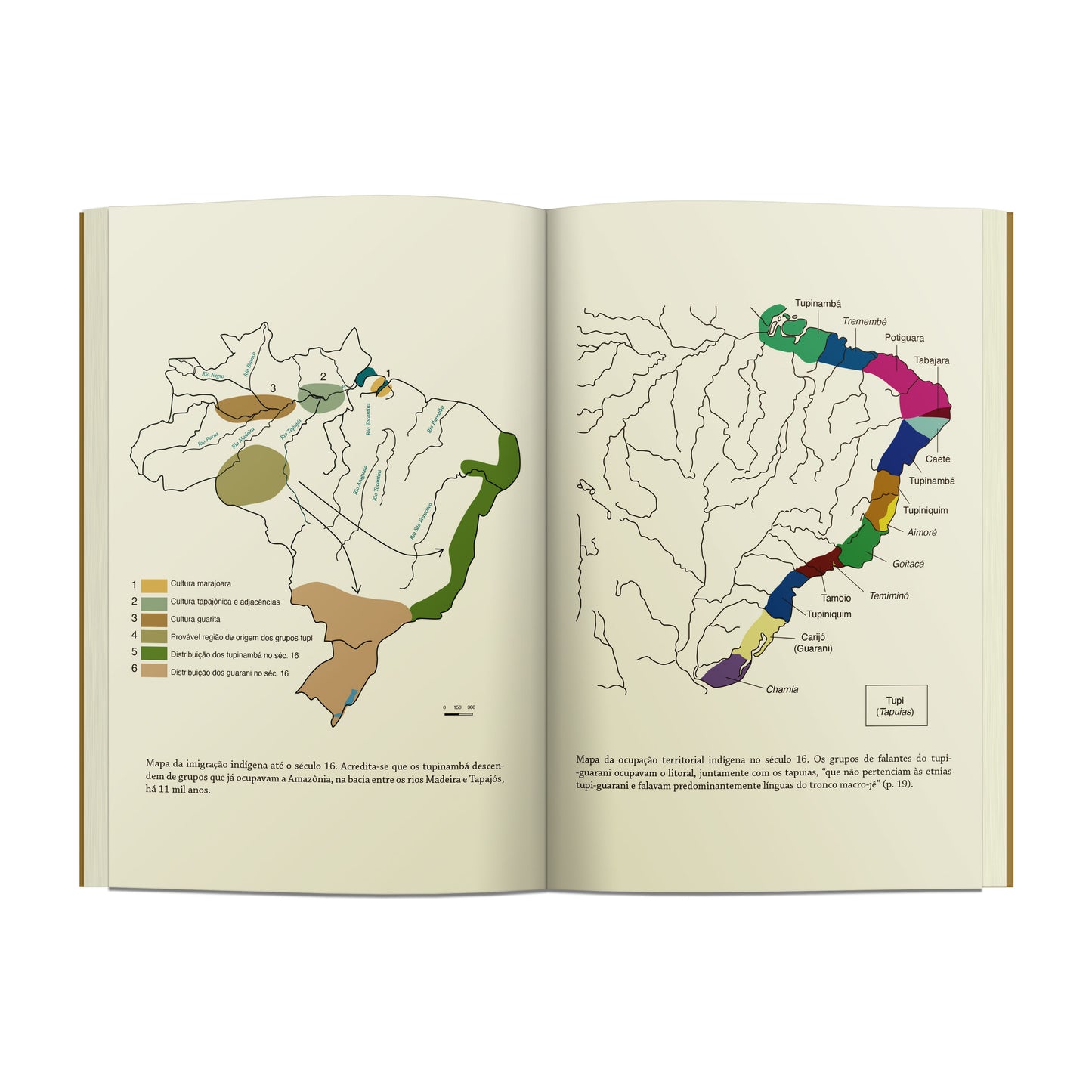
These writings decipher the world constructed by the deities Maíra and Sumé, in addition to informing the emergence of this native people who settled on the coast. Coming from the Amazon, where they had lived for at least 11,000 years, the Tupinambá were diverse and autonomous groups, speaking Tupi-Guarani, who spread throughout the country. They accumulated such precious knowledge of the territory that it served as the basis for the establishment of our first colonial centers in the 16th century. Thus, they influenced the spoken language, trade, topographical names, territorial disputes, the administration of villages and trading posts, diet, and other Brazilian customs, including bathing and hair removal.

Here, we learn how these influential indigenous people conceived of the creation of the world and the decisive mythical events that shaped their worldview. Most importantly, we understand why the Tupinambá were cannibals and which deities guided them in consuming the human flesh of those defeated in war, fulfilling their destiny to become jaguars.

“Mussa’s book records the mythical particularities of the Indians and their breadth, to leave no doubt that we are children of the same greatness.” — Paulo Bentancur, Època

“In the myth restored by Mussa, we can see that war, revenge, and cannibalism between rival Tupinambá groups were fundamental behaviors for these peoples at the beginning of Brazilian colonization.” — Rafael Cariello, Folha de S.Paulo

ISBN978-655-802-106-3
Tradutor
Altura225 mm
Largura155 mm
Profundidade10 mm
Lançamento16/10/2023
Páginas208
View full details
Conteúdo do livro
CÓDIGO DA OBRA9786558021063
Sobre o autor

Alberto Mussa

Alberto Mussa nasceu no Rio de Janeiro, em 1961. Contista e romancista, recriou a mitologia dos antigos tupinambás, traduziu a poesia árabe pré-islâmica e escreveu, com Luiz Antonio Simas, uma história do samba de enredo. Além de figurar em listas de “melhores do ano” de veículos como Veja, O Globo e Folha de S.Paulo, ganhou os prêmios Casa de Las Americas, Academia Brasileira de Letras, Oceanos, Machado de Assis (FBN) e APCA. Estudada na Europa, nos Estados Unidos e no Mundo Árabe, sua obra está publicada em dezessete países e quinze idiomas.

Ver mais sobre o autor