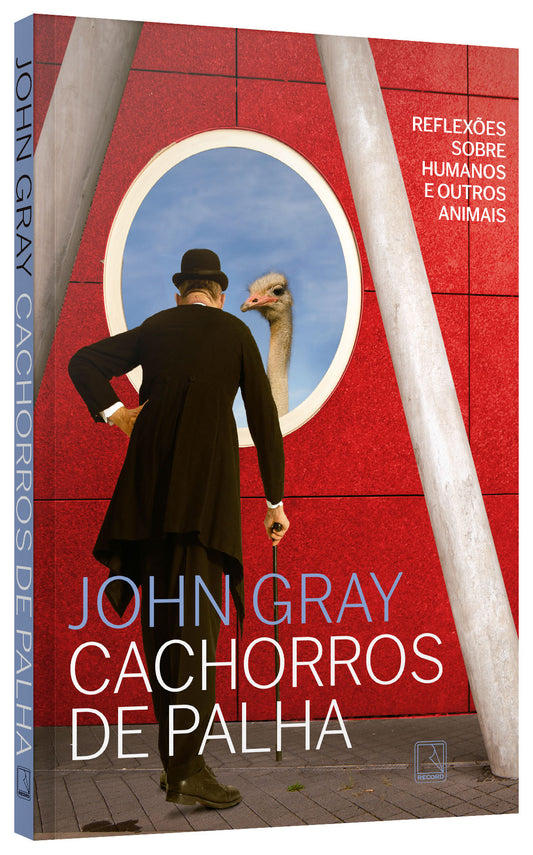
Seven types of atheism

Seven types of atheism

Autor: John Gray
Conteúdo do livro
CÓDIGO DA OBRA9788501118547
Sinopse

From the award-winning author of The Quest for Immortality and The Soul of the Puppet , an exploration of atheism and religion.

Anyone who wants to understand atheism and religion must set aside the popular assumption that they are opposites. For an entire generation, public debate has been corrupted by a reductionist and hysterical derision of religion in favor of a vague notion of "science." In Seven Types of Atheism , John Gray describes the complex and dynamic world of ancient atheisms, a tradition that is in many ways intertwined with religion, and is just as rich.

Defining atheism is like trying to capture the diversity of religions in a single formula. Gray thus classifies the atheisms analyzed in this book: the "new atheism," which attacks religion without attempting to understand it; secular humanism; the atheism that transforms science into religion (which includes evolutionary humanism, mesmerism, dialectical materialism, and contemporary transhumanism); modern political religions, from Jacobinism to contemporary evangelical liberalism, including communism and Nazism; the atheism of those who hate God, like the Marquis de Sade; the atheisms that reject the idea of a creator god without any compassion for "humanity"; and the mystical atheism of Arthur Schopenhauer.

The author explores the various ways great minds have sought to understand the questions of salvation, purpose, progress, and evil. Seven Types of Atheism is a surprising and incisive intervention in the political and scientific debate about religion and atheism.

ISBN978-850-111-854-7
Tradutor Clóvis Marques
Altura225 mm
Largura155 mm
Profundidade10 mm
Lançamento08/03/2021
Páginas196
View full details
Conteúdo do livro
CÓDIGO DA OBRA9788501118547
Sobre o autor

John Gray

John Gray é filósofo britânico, autor de obras influentes como A alma da marionete, Missa negra e A anatomia de Gray. Foi professor de Pensamento Europeu na London School of Economics e lecionou também em Oxford, Harvard e Yale. Atualmente, escreve para a revista New Statesman, onde é reconhecido por suas análises incisivas sobre política, filosofia e cultura. Seu trabalho se destaca por questionar frontalmente o humanismo secular, a ideia de progresso e os fundamentos morais da modernidade.

Ver mais sobre o autor