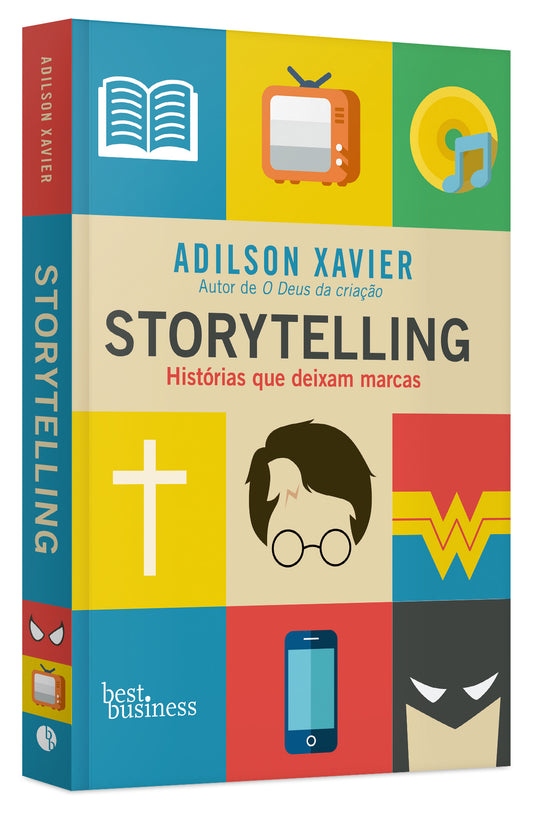
The bomb under the table , a sequel to the hit Storytelling , brings new reflections on the confusion between reality and fiction and the influence of technology on narrative.
Without conflict, there is no story. Aristotle knew this as well as the screenwriters of the films and series we watch on Netflix. The literary and audiovisual works cited in The Bomb Under the Table , alongside historical and journalistic accounts, leave no doubt about the importance of conflict and present themselves as a kind of thematic curation, a premium list to be savored later by the reader.
The book's central focus is the unprecedented public participation in the unfolding of history after the advent of the internet, with unprecedented levels of power and vulnerability. A gigantic global audience is subject to decisions made by algorithms, exposed to the schemes of unbridled manipulators, enchanted by the feeling of protagonism, and eager to voice their opinions and fight. As the author emphasizes: "We are well acquainted with the narratives of people struggling to survive or achieve a dream in the most varied eras and circumstances. The time has come to go beyond, transcending the backdrop that serves as the stories, to reach another, where the people to whom the stories are told are located."
The book addresses the fundamental conflicts of history and stories, from the ancient good vs. evil to the more recent real vs. virtual, encompassing the classics of God vs. Devil, rich vs. poor, male vs. female, and left vs. right, among others. It shows how reality and fiction intertwine and mutually influence each other, and how new technologies contribute to confusing everything. Within its pages, Noah's Ark and the Titanic coexist, politicians like Zelensky, Putin, Trump, Bolsonaro, Mandela, and Lula, characters like Batman, the Joker, Robin Hood, and Cinderella, leaders like Pope Francis, Joan of Arc, and Greta Thunberg, brands like Nike, Coca-Cola, Burger King, and others that have been, to a greater or lesser extent, pushed into ideological debate, historical events like the French and Russian Revolutions, the Crusades, and the storming of the Capitol, as well as writers, filmmakers, advertisers, communicators, and artists in general who help us see through the darkness.
Excerpt from the book: "When Storytelling: Stories That Leave Marks was released in 2015, I thought I had nothing more to say on the subject. Within the style I adopted and the territories I set out to explore, the mission was accomplished.
I didn't count on the narrative twist that would soon follow. The world was overrun with fake news. Caricatured and unlikely characters gained prominence in real life, with scripts more impactful than those conceived by experts. Some of these scripts openly defied plausibility, that indispensable quality of good stories; others, so bad, would never be approved by real storytellers.
This script derailment motivated me to investigate, reflect, and return to the keyboard. I delved into murkier waters, placing facts and their narratives side by side, recording the blend of reality and fiction, examining how creative minds capture the essence of the historical moment, both to describe it and to interpret it, to try to correct it or prevent catastrophes.