Trilogia Brasil brings together three novels by Antônio Torres: Essa Terra , O Cão e o Lobo and Pelo Fundo da Neuja , in a collection of stories of uprooting, affection and encounter.
In celebration of the 50th anniversary of his literary work, Antônio Torres, immortal of the Brazilian Academy of Letters, brings together in Trilogia Brasil the works that tell different stages of the life of a migrant, decades apart, and which here complete their course.
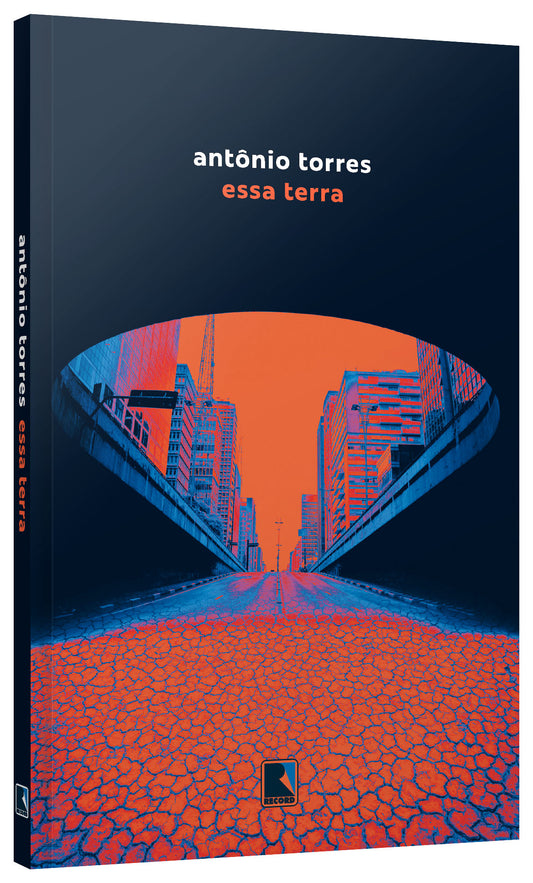
"Essa Terra " (1976) is one of the most remarkable novels in contemporary Brazilian literature. The story begins with Totonhim's remembrance of his brother's return to Junco, a small town in the interior of Bahia where they lived. His brother had fled to São Paulo in search of a better life. After many years of failure in the big city, he decides to return to his hometown, in the hinterland of the Northeast. Once there, he becomes disillusioned with everything he finds and rediscovers and ends up hanging himself from a hammock. His older brother's suicide impacts Totonhim and his entire family. "Essa Terra ," the first work in the trilogy, is also a success abroad, with translations in France, Germany, Italy, the Netherlands, England, the United States, Israel, and Cuba. For decades, it maintained its initial vigor and freshness intact, earning a prominent place in Brazilian culture.
Twenty years after leaving for São Paulo, Totonhim, in *The Dog and the Wolf* (1997), retraces the journey in reverse: he returns to Junco, on a whirlwind visit to his father, who has just turned 80. He is the same father he left twenty years earlier, but more serene, perhaps, and more solitary. In the three stages of a day that follows the path of the sun—morning, afternoon, evening—the narrator attempts to reclaim possession of a place where his roots lie. A place where stories intertwine, rhythmed by ancient music and melodies.
About a decade later, in Pelo fundo da agulha (2006), Totonhim is alone in the world. He's retired, separated from his wife and children, lost his best friend, and embarks on another journey back—a completely internal one. Lulled by the image of his elderly mother, still able to thread the needle without glasses, he replays various moments of his life, as if looking at her through that hole. The images now exist only in Totonhim's memory, revealing the São Paulo side of his story.
By portraying the impact of the big city on the migrant—the immigrant from the Northeast—the Brazil Trilogy represents the Brazilian population that migrates in search of better living conditions, but encounters a hostile reality in urban environments. Between encounters and separations, affection, uprooting, and returning to one's origins, the story of a migrant and his suffering is also the story of Brazil.
About this land :
“ This land is not the story of a land, but of its human product.” - Leonor Bassères, Tribuna da Imprensa
“Full of unanswered questions from a country in transition.” - Publishers Weekly
About The Dog and the Wolf :
“There is magic in the language of this beautiful novel.” - César Leal, Diário de Pernambuco
“It is his masterpiece.” - Ana Maria Machado, Jornal do Brasil
About Through the Eye of the Needle :
“ Through the Eye of the Needle is one of the most beautiful novels about time that passes and caresses and bites us, caresses and makes us hurt.” - Ignácio de Loyola Brandão, Estado de S. Paulo
“With Pelo fundo da agulha (Through the Needle) closes the circle of the trilogy that began with Essa Terra (This Land) , from 1976, and followed by O Cão e o Lobo (The Dog and the Wolf ), from 1997, marking three periods in the work of Antônio Torres and three distinct moments in the history of fiction in the country.” - Cláudia Nina, Revista Brasil / Brazil , Brown University