The Urban Condition – Essays on the Geopolitics of the City is an eloquent demonstration of the relevance and richness of analyzing physical space for understanding certain phenomena, a dimension often neglected in studies produced by the social sciences. This work requalifies the importance and scope of contemporary geography, especially with regard to interpretations of sociopolitical dynamics. In this sense, citizenship, sovereignty, and public space are some of the categories reconsidered in light of their relationship with spatiality. The author seeks, first and foremost, to construct general categories that express ways of conceiving space, nomospace, and genospace. From there, he examines, in several instances, how these categories can help us reflect on the idea of rights and duties, and how this idea materializes in physical and behavioral forms at various times and places in urban life. The title The Urban Condition expresses the conception that the city is the combination of a certain social structure with a precise physical form. One cannot exist or be understood without the other, and therefore, the examination of urban dynamics must necessarily also focus on the physical layout or, in other words, the geographic dimension of these phenomena. The author, Paulo César da Costa Gomes, holds a PhD from the University of Paris-Sorbonne and is dedicated to teaching and research in the epistemological field of geography. Since 1995, he has taught at the Federal University of Rio de Janeiro (UFRJ) and, for four years (1997-2000), was a visiting professor in France, at the University of La Rochelle. He is a CNPq researcher, an associate member of two CNRS research laboratories, and received a grant from the Faculty Research Program of the International Council for Canadian Studies to develop research projects in Canada.
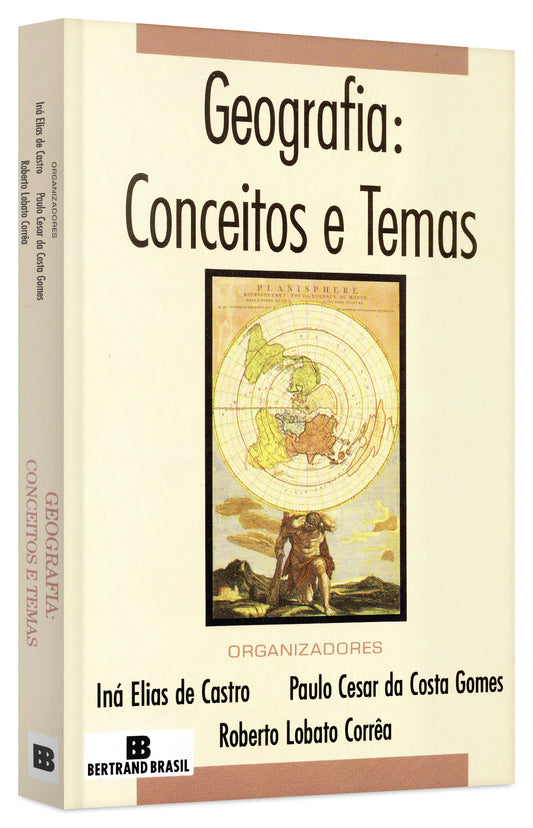
Paulo César da Costa Gomes é professor de Geografia da UFRJ e doutor pela Universidade de Sourbonne em Paris. Bolsista pelo Governo do Canadá nas Universidades de Otawwa e British Columbia. Atualmente ele é vice-coordenador do Curso de Pós-Graduação de Geografia da UFRJ. É autor de Geografia e Modernidade e, Geografia, Conceitos e Temas e Brasil: Questões Atuais da Reorganização do Território foi coordenado por ele.