"
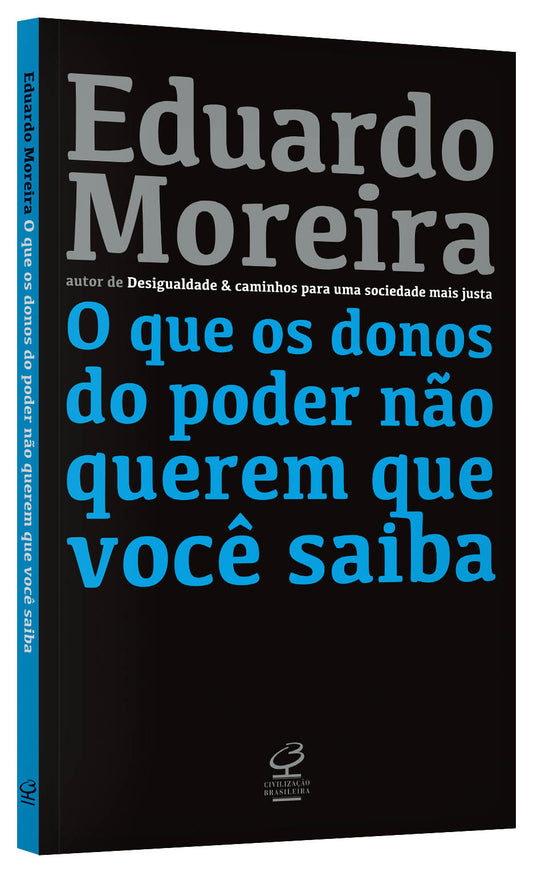
Why is wealth distribution, not pension reform, the way for Brazil to resume growth?
“After spending twenty years in the financial market, Eduardo Moreira realized he was “looking in the wrong direction”; and, more seriously, “he was one of those responsible for the biggest problem the world has faced for centuries”: inequality.
The book presents the circuits that connect this formidable factory of inequalities in which we live. In accessible language, it explains the concepts of income redistribution, income and wealth taxes, the role of growth in wealth generation, the issue of private property, the role of private banks, and the "cruelty" of the government's debt mechanism, which generates money for a "select group" of community members but does not generate wealth for nations.
The book analyzes the true meaning of "wealth," its creation and distribution, and its consequences on people's lives. Wealth without money cannot maintain a strong and vibrant community; and money without wealth has no value, the author asserts.
Drawing on Karl Polanyi ( The Great Transformation ), the author points out that there are mechanisms that act to cushion the effects of wealth concentration. In a democratic society, where the political system represents the interests of society as a whole, the state can act to redistribute income by implementing social policies and adopting a tax system that proportionally impacts the income, profits, assets, and inheritance of the wealthiest (as is the case in northern European countries).
This book is essential in Brazil. We are the most unequal nation in the world; we have a slave-owning past; and we haven't even faced the inequalities of the 19th century yet."
Eduardo Fagnani - Professor at the Institute of Economics at Unicamp, researcher at the Center for Trade Union and Labor Studies (CESIT) and coordinator of the Social Policy Platform network.
"