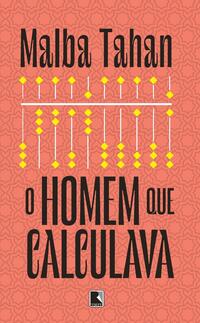
The man who calculated

The man who calculated

Autor: Malba Tahan
Conteúdo do livro
CÓDIGO DA OBRA9786555875911
Sinopse

The book on Mathematics that has taught and enchanted generations, with a new cover and a foreword by Mamede Jarouche.

In the celebrated "The Man Who Calculated ," Malba Tahan (pseudonym of Professor Júlio César de Mello e Souza) recounts the incredible adventures of a brilliant Persian calculator, Beremiz Samir, whose fantastic solutions to seemingly insoluble problems and mathematical feats became legendary in ancient Arabia, enchanting kings, poets, sheiks, and scholars. This edition also features a foreword by University of São Paulo professor Mamede Jarouche.

Using mathematics in a lighthearted and captivating way, The Man Who Counted has been consumed with rare avidity for generations. The light and entertaining mathematics presented in this work is undoubtedly less painful than that taught in schools. Malba Tahan managed to perform almost a miracle, a magic trick: uniting science and fiction. His talent and prodigious imagination are capable of creating characters and situations with great popular appeal, which explains his immense success.

The Man Who Counted is an opportunity for lovers of numbers and mathematical games to delight in this book's many playful chapters. Beremiz Samir, a traveler with an intuitive gift for mathematics who wields numbers with the ease of an illusionist, solves seemingly insoluble problems with impressive simplicity. Figures and tables make this masterpiece of children's literature even easier to read.

ISBN978-655-587-591-1
Tradutor
Altura205 mm
Largura135 mm
Profundidade21 mm
Lançamento21/08/2023
Páginas384
View full details
Conteúdo do livro
CÓDIGO DA OBRA9786555875911
Sobre o autor

Malba Tahan

Júlio César de Mello e Souza nasceu em 1895, no Rio de Janeiro, filho de um funcionário público e de uma professora, pais de mais oito filhos. Quando menino estudou no Colégio Militar do Rio de Janeiro e no Colégio Pedro II. Apesar de ter sido mau aluno na disciplina, formou-se professor de matemática e engenheiro, vindo a lecionar em diversos estabelecimentos de ensino, como o próprio Colégio Pedro II, a Escola Normal e a Universidade Federal do Rio de Janeiro. Faleceu aos 79 anos no dia 18 de junho de 1974, em Recife, onde, a convite da Secretaria de Educação e Cultura, ministrava cursos para professores. Em 2013, o governo brasileiro instituiu o Dia Nacional da Matemática na data de seu nascimento, como homenagem à memória do escritor e professor e de sua contribuição à educação matemática no país.

Ver mais sobre o autor