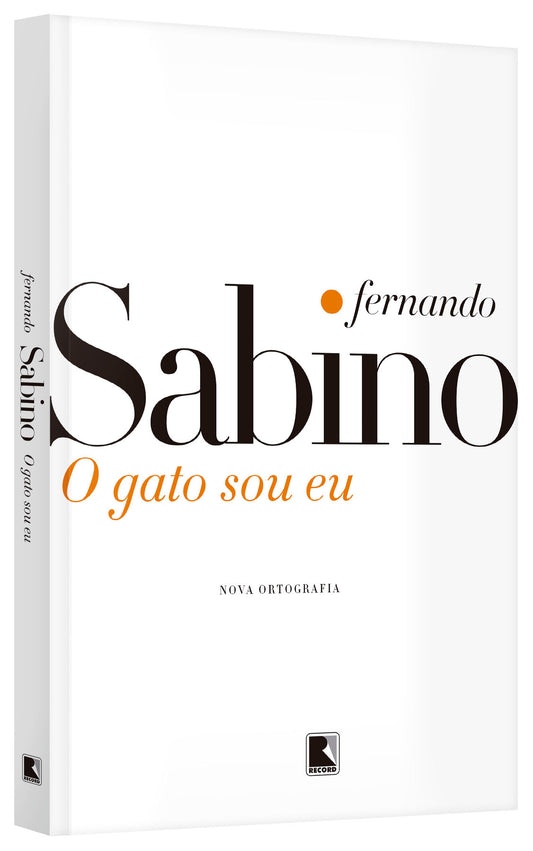
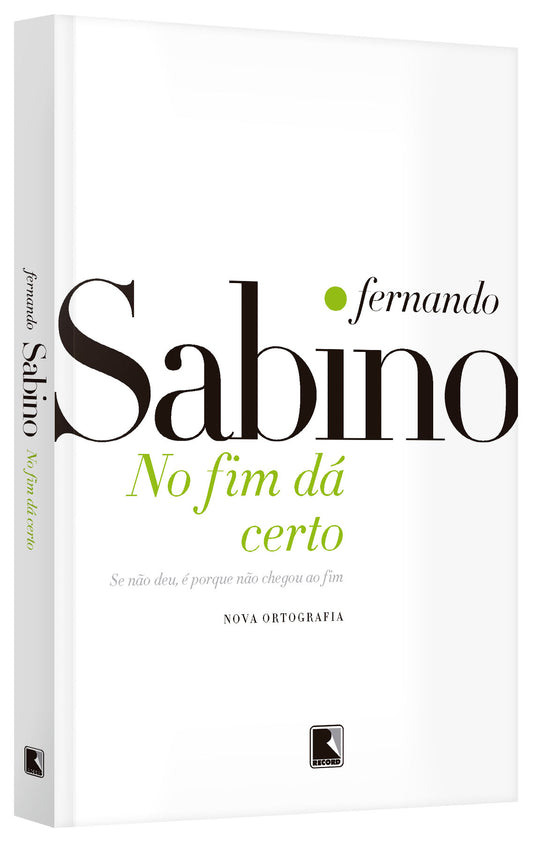
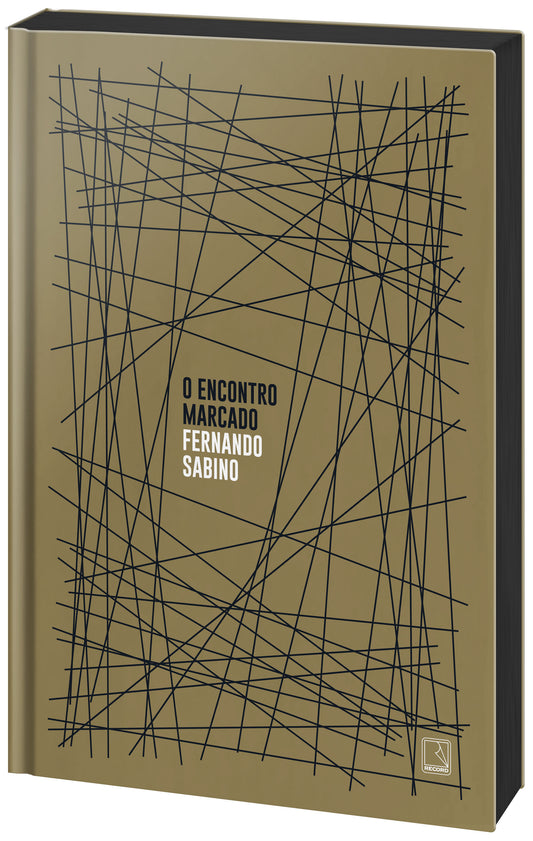
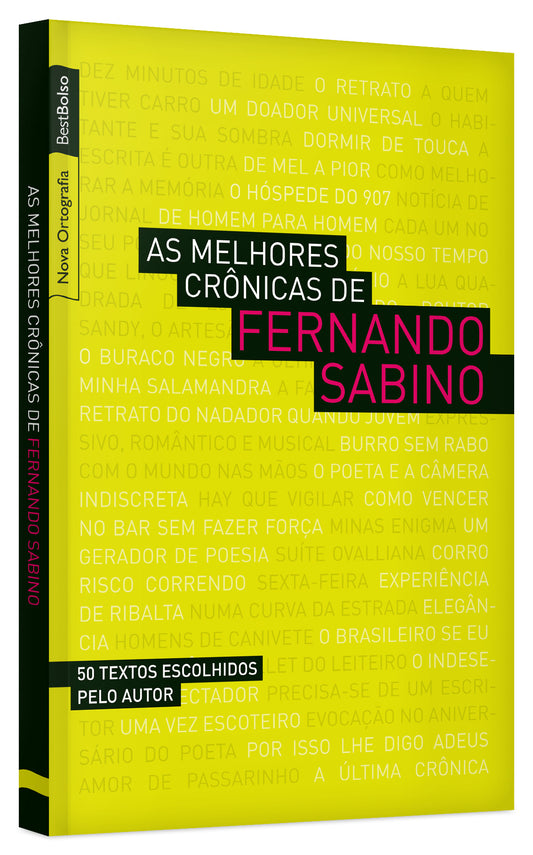
These pages, previously unpublished in his books, represent years of literary activity, carefully selected by the author himself. The book opens with an acknowledgment of the Machado de Assis Award for Lifetime Achievement, awarded to him by the Brazilian Academy of Letters in 1999. It then goes back to the beginning of his career: a column, "The Butterfly Hunter" (written at age 15) for the Alterosas magazine in Belo Horizonte, about his conversation with a little bird. Shortly thereafter, he published an enthusiastic review of John Steinbeck's novel "The Grapes of Wrath" in O Diário, a Catholic-oriented newspaper in Minas Gerais, which distinguished it with the following warning: "In addition to the brilliant article by our contributor Fernando Tavares Sabino, we must add that reading "The Lives of Wrath" should be reserved for adults of established character and forbidden to young ladies in their teens." The author of this "brilliant article" was 16 years old. Not satisfied, the young Tavares Sabino soon irrefutably denounced to Brazil and the world that the current American bestseller, "Rebecca" by Daphne du Maurier, was a plagiarism of the Brazilian novel "The Successor" by Carolina Nabuco. Around this time, he repeatedly praised the novels of Octavio de Faria, the idol of his youth. This was followed by an emotional response to Mário de Andrade's letter about his first book, at the age of 18. As a member of the Minas Gerais delegation at the Writers' Congress in São Paulo, he discovered that the writer Edgar Cavalheiro was a gentleman. Already in Rio, he made a more serious discovery: that of Clarice Lispector, with whom he became lifelong friends (after recognizing his literary importance in an article about the novel "The Chandelier"). He reminisces about his past and past lives in New York: his adventures and misadventures as an amateur photographer, his antics with Vinícius de Moraes and Jayme Ovalle, painting and embroidering with painters Salvador Dali, Noêmia, and Lazar Segall. He gathers sensational revelations about what Frank Sinatra thought of women (and what so many other men still think). After a thousand adventures, he ends his American stint with the only two poems he ever wrote: "Synopsis of Time" and "The Poet, Drunk, Pees." He moves on to a series of chronicles about street and bedroom scenes in Rio. He transcribes some of his thrilling literary recreations of daily police events, published in the Diário Carioca in the series "O Destino de Cada Um" (The Destiny of Each One), under the pseudonym "Pedro Garcia Toledo." He gives a thrilling description of his forty-odd-day car trip with Millôr Fernandes across Brazil, from Rio to Porto Alegre. (And how they became "founders" of the city of Toledo, in the interior of Paraná). He describes his first trip to several European countries and how he was banned from re-entering Portugal after writing about Salazar's dictatorship. He speaks in detail about his adventures in Cuba, traveling with Jânio Quadros, his dealings with Guevara, and disagreements with Fidel Castro, whose revolver was stolen during a reception at the Brazilian Embassy. His experience of living in London for two years as a journalist and cultural attaché yielded a series of chronicles on Brazil's "success" in the 1966 World Cup, for example. On the other hand, he talks about great figures like Laurence Olivier, from whom he obtained a valuable ticket for Carlos Lacerda to see his "Othello" (he ended up not going), his meeting with the painter Miró, the Queen's visit to Brazil, the victorious Brazilian tennis queen Maria Ester Bueno, the deaths of Churchill and the poet Dylan Thomas, the Beatles in private—and so on. Back in Brazil, he recounts the shocking experience he experienced as a young man tortured by the police of the dictatorship then reigning among us. From then on, he recounts his meetings with great figures such as Ary Barroso and Chico Buarque, Odete Lara and Márcia Haydée, Erasmo and Roberto Carlos, Nilton Santos and Tostão, Pancetti and Calasans Neto, Maria Bethânia and Maria Lúcia Godoi, Eder Jofre and Bráulio Pedroso, José Américo de Almeida and Tristão de Athayde, Jorge Amado and Dorival Caymmi, Alfredo Machado and Borjalo. He relives encounters with poet Stephen Spender and novelist John dos Passos, and recounts his encounters with Pablo Neruda. His trip to Hollywood with filmmaker David Neves, his dear friend, to make the series of mini-films "Live Chronicles" for TV Globo, yielded yet another series of delightful chronicles—such as those on sexual permissiveness in Los Angeles, the madness reigning at Universal Studios, the thrill of being directed by Hitchcock while filming the great director in refuge. He selects precious essays on the great names of world literature, whose works he prefaced in the "Immortal Novels Collection" by Editora Rocco, which he edited: Henry James, Flaubert, Pirandello, Cervantes, Stevenson, Chekhov, Andreyev, Melville, Nerval, Hoffman, Musset. All this amid poignant or hilarious anecdotes, captured in street scenes, in domestic accidents, or in everyday life. And he recalls his time with his best friends, such as Vinícius de Moraes, Rubem Bragra, Hélio Pellegrino, Otto Lara Rezende, and Paulo Mendes Campos. The exquisite literary quality shines through both in a moving testimony of his daughter's First Communion and in the example of concision as a rule of style, in one- or two-line anecdotes. The book concludes in the 1990s, with the account of the creation of three literary works, each in its own genre: "Zélia, a Passion," about the life of the former Minister of Economy; "With the Grace of God," a faithful reading of the Gospel according to the mood of Jesus; and "Amor de Capitu," a faithful reading of Machado de Assis's novel without the narrator Don Casmurro. Perhaps some readers may be surprised by certain intimate passages. "My life is an open book," explains Fernando Sabino. And he suggests "opening the book at random, reading only the loose pages that spark interest; then the reader will claim, like so many others, to have read the entire book." Which is what will probably end up happening.
Fernando Sabino (1923-2004) nasceu em Belo Horizonte (MG). Publicou seu primeiro livro, Os grilos não cantam mais (1941), ainda na adolescência. Recebeu, então, uma carta elogiosa do poeta modernista Mário de Andrade, dando início à preciosa correspondência entre ambos, mais tarde publicada sob o título Cartas a um jovem escritor (1981). Mudou-se para o Rio de Janeiro em 1944, onde foi sócio do cronista capixaba Rubem Braga, na Editora do Autor e na Editora Sabiá. Escreveu alguns romances que se tornaram clássicos da literatura nacional, entre eles O encontro marcado (1956), O grande mentecapto (1976) e O menino no espelho (1982). Sabino também foi um grande cronista, famoso por coletâneas como O homem nu (1960) e A cidade vazia (1963). Em 1999, recebeu da Academia Brasileira de Letras o prêmio Machado de Assis pelo conjunto da obra.
Clarice Lispector (1920-1977) nasceu na Ucrânia e chegou ao Brasil ainda criança, em 1922, com seus pais e duas irmãs. Graduou-se em Direito pela Universidade Federal do Rio de Janeiro (UFRJ), mas nunca exerceu a profissão, tendo se dedicado, toda a vida, à literatura. Seu livro de estreia, Perto do coração selvagem (1943), foi lançado quando ela tinha apenas 24 anos, e ganhou o prêmio de melhor romance de estreia da Fundação Graça Aranha em 1944. Além dessa obra, Clarice publicou mais de vinte livros, incluindo romances, contos, crônicas e literatura infantil. Foi agraciada com diversos prêmios, como o Jabuti (1961 e 1978) e o Carmem Dolores Barbosa (1961). Em 2011, foi postumamente homenageada com a medalha da Ordem do Mérito Cultural, reconhecida como uma das personalidades mais importantes para a cultura brasileira.