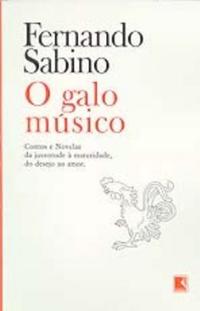
THE MUSICIAN ROOSTER

THE MUSICIAN ROOSTER

R$ 59,90
R$ 59,90
ou 3x de R$ 19,97
Sinopse
The work brings together literary creations conceived at different stages of the Minas Gerais writer's life, "from youth to maturity, from desire to love." The first, written while still very young, won a national prize in the Permanent Short Story Contest of Carioca magazine, which stated: "This story is ingenious. It reveals qualities of invention and humor. With trouvailles like this, many people have written stories that are out there, in books and translations. It's worth emphasizing, however, that its author is practically a kid: a 14-year-old boy." In the story's introduction, the author confesses that, although elated with the prize, the "14-year-old boy" didn't know what trouvailles meant and didn't like the "kid" at all. At 18, Sabino won an even greater prize: the admiration of Mário de Andrade, in a letter of praise for his story "The Companion"—a little girl's narrative, in her own language, about her friendship with a boy of the same age. The short story "The Musician Rooster" was inspired by his father's pet rooster (whose memory he so cherished in *In the End, It Works*). The devilish rooster only tormented the young student, crowing day and night beneath his bedroom window. In the story, the character confesses that he nearly strangled him. His father liked the story, but advised him to travel, to see other places and more interesting people. He followed the advice, traveled the world, but met no one like his father. And he confesses that from then on, he began to "hear the rooster crow without knowing where." This is followed by the novel "The Other Father," about the drama of a young teenager struggling with the passion inspired by the man she considered herself his daughter. Adulthood begins under the sign of desire, in the love of a student for his landlady and in the initiation of a young man by the "First Blonde," with her repertoire of exquisite delights in bed. "The Faithful Husband" is the one who ends the night of bohemian life in the arms of his own wife. And "The Girl from Búzios" turns out to be a nymphet, whose lust Petrônio himself would never have imagined could be inspired by the boy in his Satyricon. In "The Face," the most nocturnal aspect of the author's experience takes him back to his 18th birthday, faced with the sinister vision of a face through the window. The night is a child—a girl fleeing the lust of men. And after "The Pharisee" goes through the hellish experience of marijuana, the night of love in the final novel, as in the poet's verse, is a "unique night."
ISBN978-850-191-350-0
Tradutor
Altura210 mm
Largura140 mm
Profundidade12 mm
Lançamento19/11/1998
Páginas224
View full details
R$ 59,90
R$ 59,90
ou 3x de R$ 19,97
Sobre o autor

Fernando Sabino

Fernando Sabino (1923-2004) nasceu em Belo Horizonte (MG). Publicou seu primeiro livro, Os grilos não cantam mais (1941), ainda na adolescência. Recebeu, então, uma carta elogiosa do poeta modernista Mário de Andrade, dando início à preciosa correspondência entre ambos, mais tarde publicada sob o título Cartas a um jovem escritor (1981). Mudou-se para o Rio de Janeiro em 1944, onde foi sócio do cronista capixaba Rubem Braga, na Editora do Autor e na Editora Sabiá. Escreveu alguns romances que se tornaram clássicos da literatura nacional, entre eles O encontro marcado (1956), O grande mentecapto (1976) e O menino no espelho (1982). Sabino também foi um grande cronista, famoso por coletâneas como O homem nu (1960) e A cidade vazia (1963). Em 1999, recebeu da Academia Brasileira de Letras o prêmio Machado de Assis pelo conjunto da obra.

Clarice Lispector (1920-1977) nasceu na Ucrânia e chegou ao Brasil ainda criança, em 1922, com seus pais e duas irmãs. Graduou-se em Direito pela Universidade Federal do Rio de Janeiro (UFRJ), mas nunca exerceu a profissão, tendo se dedicado, toda a vida, à literatura. Seu livro de estreia, Perto do coração selvagem (1943), foi lançado quando ela tinha apenas 24 anos, e ganhou o prêmio de melhor romance de estreia da Fundação Graça Aranha em 1944. Além dessa obra, Clarice publicou mais de vinte livros, incluindo romances, contos, crônicas e literatura infantil. Foi agraciada com diversos prêmios, como o Jabuti (1961 e 1978) e o Carmem Dolores Barbosa (1961). Em 2011, foi postumamente homenageada com a medalha da Ordem do Mérito Cultural, reconhecida como uma das personalidades mais importantes para a cultura brasileira.

Ver mais sobre o autor
9788501913500.jpg
THE MUSICIAN ROOSTER