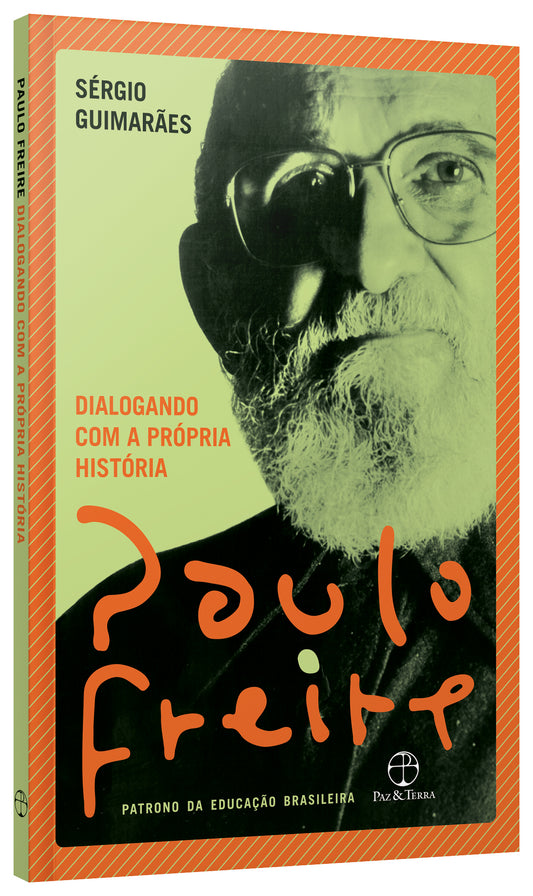
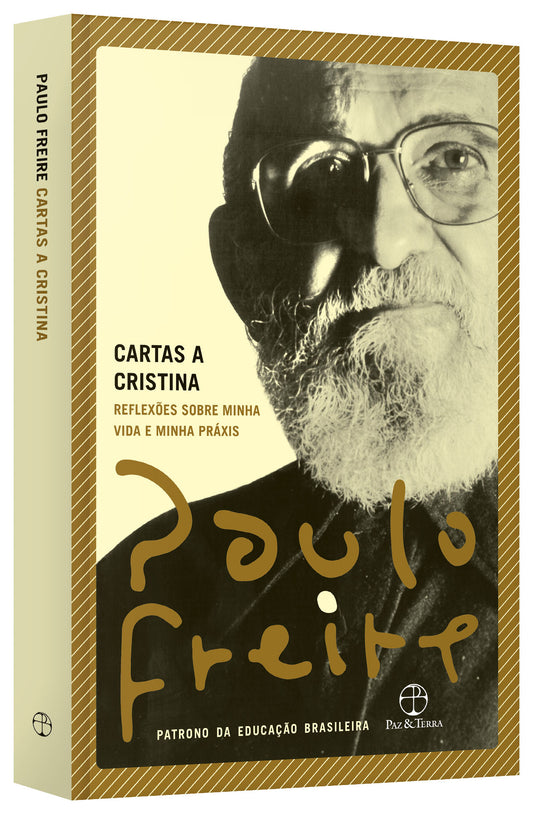
"
Paulo Freire and Donaldo Macedo in a rigorous and innovative critique of traditional literacy proposals.
Reading the world precedes reading words, just as the act of reading words necessarily implies a continuous rereading of the world. Based on this basic premise, Paulo Freire, in collaboration with Donaldo Macedo, uses his pedagogical experience in Guinea-Bissau in *Literacy: Reading the World, Reading the Word* to dissect the act of reading in all its dimensions. His objective: to unveil and disseminate theoretical assumptions and insights contained in one of his main pedagogical projects, to which he invested dedication and commitment throughout his life—the literacy of young people and adults from the lower classes, who had been denied the right to literacy at the appropriate time and place.
Literacy: Reading the World, Reading the Word offers a rigorous and innovative critique of traditional literacy approaches developed in Brazil and the United States, which, in most cases, seek to learn the official language through the so-called formal standard. Considering literacy a process that must simultaneously rescue and recreate the lived experience of the learner, Paulo Freire theorizes and practices a critical and liberating literacy that empowers the oppressed class to reappropriate their history through the collective construction of knowledge, rehabilitating their ability to intervene in the transformations of their social context.
Literacy instruction thus proposed uses the language used by the learner to express their hopes, needs, fears, dreams, and aspirations. This makes Literacy: Reading the World, Reading the Word an increasingly relevant book. The edition features a foreword by Ann E. Berthoff, an introduction by Henry A. Giroux, and, in the appendix, a letter from Paulo Freire to Mário Cabral.
*
In 1963, in Angicos, in the interior of Rio Grande do Norte, three hundred rural workers were taught to read and write in just 40 hours using the method proposed by Paulo Freire. This was the result of the pilot project of what would become the National Literacy Program under the government of João Goulart, the president who would later be deposed in March 1964. In October of that same year, Freire left Brazil to protect his own life. He only returned to the country in 1979, with the democratic opening.
Throughout his career, Paulo Freire has received more than one hundred honorary doctorates from various national and international universities, as well as numerous awards, including the UNESCO Education for Peace Award and the Brazilian government's Order of Cultural Merit. He is a member of the International Adult and Continuing Education Hall of Fame and the Reading Hall of Fame.
*
"The progressive educator rejects the dominant values imposed on schools because they have a different dream, because they want to transform the status quo. Naturally, transforming the status quo is much more difficult than maintaining it. The question you raised relates precisely to this theory. As you said, the educational space reproduces the dominant ideology. However, it is possible, within educational institutions, to act contrary to the imposed dominant values."
"