Crimes of passion

Crimes of passion

R$ 59,90
R$ 59,90
ou 3x de R$ 19,97
Sinopse
"

Ten years after Elephant Cemetery , this reunion with Dalton Trevisan.

At that time, Dalton was a major name in Brazilian short stories, already consecrated by critics. Today, he is a major name in global short stories, translated into many languages and the subject of countless theses. The essential point is that in these ten years, we have seen the edition or reissue (and in Dalton's case, a reissue is virtually a new first edition, as he rewrote most of his works) of a dozen books of the highest literary caliber, which definitively established the new image of the short story in Brazil. An image that has been imitated and even copied by two generations of younger short story writers. After all, we all need a master. And he is there in "Novels Not Exemplary , " "Death in the Square ," "Elephant Cemetery ," "The Vampire of Curitiba ," "Disasters of Love ," "Conjugal War ," "The King of the Earth , " "The Bird with Five Wings ," " The Knife in the Heart ," "Abyss of Roses ," and "The Trumpet of the Avenging Angel ."

A music critic wrote with admiration that Beethoven endlessly repeated the same melodic phrases, and therein lay his genius. He was never satisfied with the initial form or with successive forms, for creation is a leap toward the eternal. I won't compare Dalton to Beethoven, but the fact is that a similar observation has been made more than once regarding his recent stories, which repeat the misunderstandings and conflicts of Hansel and Gretel, of all the Hansel and Gretel of an irremediably unkempt Curitiba. I don't compare him to Beethoven, but I can't help but find him reminding me insistently of Jerome Bosch, whether in his Universe of Sexual Hells or in his Garden of Earthly Delights, so popular in the Middle Ages, whose customs and vices they represented.

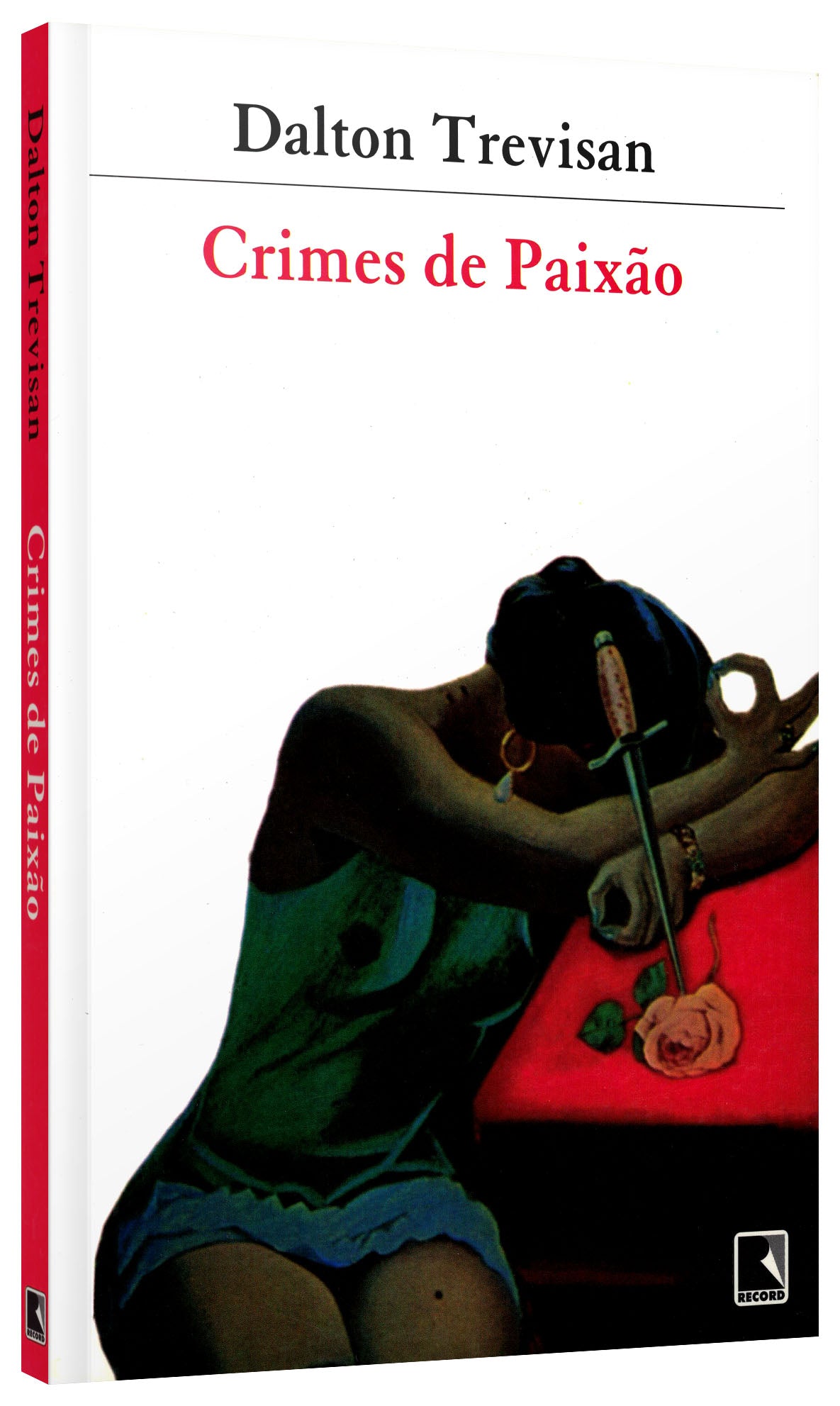
Dalton Trevisan's latest books, especially this one , Crimes of Passion , show us the writer's meticulous descent into his own private hells, creating with his various stories a kind of grotesque canvas, with contrasting strokes of pathos and beauty. It has been said of Bosch that he used obscene perversions as an element of moral critique. At this point, we can't say that Dalton comes to us with moralizing intentions; he's not even a satirist (perhaps just a touch sadistic in the delight with which he describes small miseries, frustrated debauchery, and impotent fetishisms).

His style has changed significantly since the days of Joaquim and those pamphlets that would revolutionize Brazilian short stories. Being a viscerally literary writer, obsessively concerned with perfection, he increasingly distances himself from the "literary style," stripping away everything that seems superfluous in fictional texts. In pursuit of absolute realism, he shifted the focus of his stories; they ceased to be narrated and became lived experiences. We rarely feel the presence of the "author" in them. It's a stripping down that already begins to border on hermeticism, as if the writer himself sometimes doesn't know what's going on or what his characters are thinking. Dalton's sentences are increasingly shorter, reduced to the bare minimum, to the essential. The use of dialogue is a way he found to interfere as little as possible with the story. His short stories aspire to remove the barrier between fiction and reality. Without ceasing to be short stories. Because we are faced with a writer who seems to me to be the most profoundly and anguishedly convinced that the act of writing, of creating, involves a limitless responsibility, as the main function of his life.

- Fausto Cunha

"
ISBN978-850-101-380-4
Tradutor
Altura210 mm
Largura135 mm
Profundidade8 mm
Lançamento01/08/1978
Páginas144
View full details
R$ 59,90
R$ 59,90
ou 3x de R$ 19,97
Sobre o autor

Dalton Trevisan

No dia 14 de junho de 1925, nasce Dalton Trevisan. Em Curitiba, é claro. A mesma Curitiba em que cresce e ganha a fama de "vampiro". A mesma Curitiba que eternizou em tantos contos - e que, justamente por isso, tem com ele um débito eterno. A mesma Curitiba cheia de mistérios. O próprio escritor é um deles: para se conceber um histórico de Trevisan, é preciso a habilidade das cerzideiras, cosendo retalhos aqui e ali, em uma ou outra reportagem, nas antigas e raras entrevistas. Formado em Direito, exerceu a função de repórter policial e crítico de cinema. Um acidente com o forno de uma olaria, em 1945, quase lhe tira a vida. Trevisan foi internado com fratura de crânio, mas se recuperou para editar, a partir do ano seguinte, a revista Joaquim, que duraria até 1949. Em 1950, o escritor vai para a Europa. Casa-se em 1953, tornando-se pai de duas filhas. Escondeu-se no anonimato para vencer um concurso de contos no Paraná, em 1968. Gosta de filmes de bangue-bangue e de passear pelas ruas da capital paranaense. Já teve livros traduzidos para diversos idiomas, como o inglês, o espanhol e o italiano. Na Hungria, alguns de seus contos inspiraram uma série de TV. No Brasil, alguns textos foram adaptados para o cinema e a TV. Seus livros são editados pela Record desde 1978. Durante anos, seus livros ganharam identidade visual criada pelo artista gráfico Poty. Depois, a parceria mudou: figuras em nanquim do dadaísta alemão George Grosz, resgatadas da Berlim do tempo da república Weimar, dão o tom apocalíptico que os escritos de Trevisan foram assumindo.

Ver mais sobre o autor
9788501013804.jpg
Crimes of passion